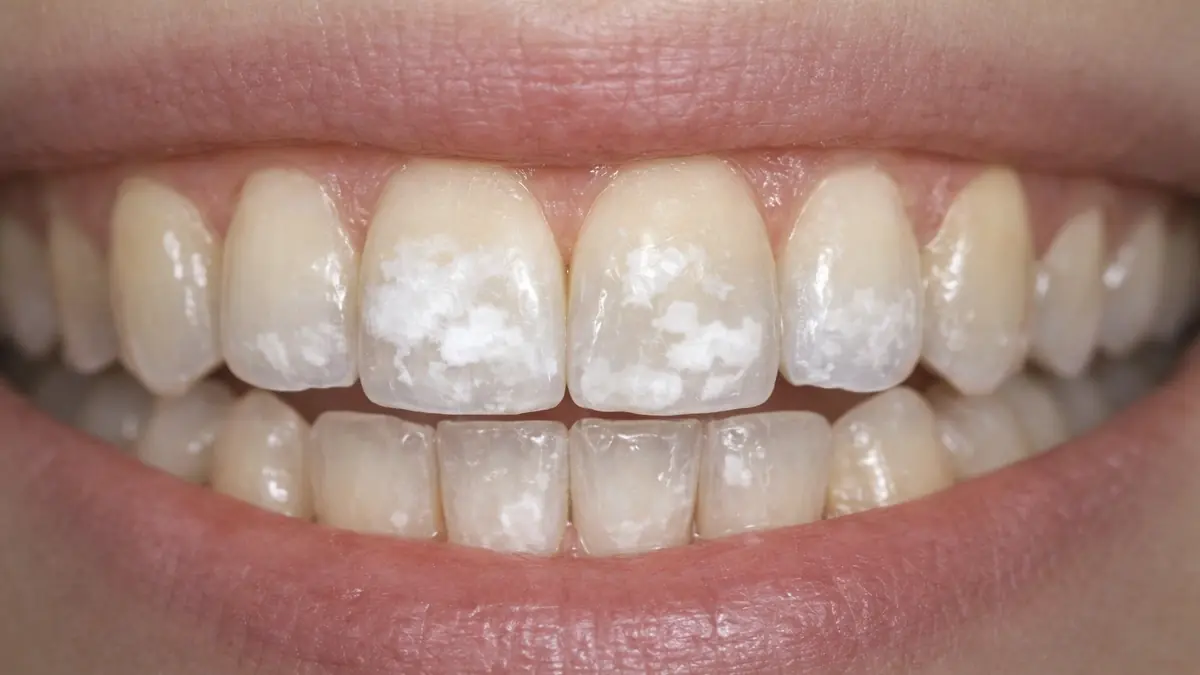
Have you ever looked in the mirror and seen the small white spots on your teeth? Initially, you think these are the spots you miss while brushing, but this is not the reality. They are warning signs about damage in enamel or even tooth decay.
What Are White Spots on Teeth?
Many people notice these white spots from normal wear, after braces or increased use of fluoride during childhood. Teeth do not look good with these spots, and they affect your whole personality.
The good thing about them is that they are not permanent in most cases. You can treat them and get your confident smile back with proper care. Consider this article a comprehensive guide to understanding the reasons and solutions to treat these white spots on your teeth.
Introduction: Why Are My Teeth Acting Up?
White spots are discoloured and chalky patches on enamel that are usually present at the front of the teeth but can appear anywhere. Their size varies; they can be as small as hardly notice or as large as to catch the eye every time you smile.
They appear on those areas of the teeth where enamel is less mineralized or weak. You can take the example of enamel as a raincoat for your teeth. It shows these white marks if it is patchy, damaged or thin.
Common causes are:
- Demineralization – Mineral depletion in enamel because of plaque or acid
- Fluorosis – Use of excessive fluoride-based products in early age
- Enamel Hypoplasia – Thin or poorly developed enamel due to disease or genes
Common Causes of White Spots on Teeth
Here’s a detailed breakdown of what might be behind those white patches:
| Cause | How It Happens | Who’s Most Affected | Possible Signs |
| Fluorosis | Increased fluoride uses in early age | Children who have increased intake of fluorinated water or use of such toothpastes | Identical white patches |
| Demineralization | Build-up of plaque, use of excessive acidic food or poor oral hygiene | Mostly Adolescents face it, especially post braces | Rough and chalky marks |
| Enamel Hypoplasia | Disease, nutritional deficiency in early age or genetics | Children and adults | Weak enamel. rough surface, white and brownish spots |
| Diet & Lifestyle | Excessive intake of acidic or sugary food and drinks, frequent snacking | People of any age, especially those who love soda and caffeinated drinks | Thin and discoloured enamel |
Sugary foods promote cavities and speed up the process of enamel demineralization. This is one of the major causes of the appearance of these white spots on your teeth. Read my article https://healthinnovate.org/why-do-sugary-foods-hurt-my-teeth/ to understand how sugar affects our oral health.
How White Spots Affect Your Smile
It is important to understand that not every white spot is dangerous. Yet some of them are early signs of enamel damage which leads to tooth decay.
Here are some points that explain why they matter:
- Affects Confidence – You lose confidence while smiling with visible, large white spots
- Tooth Sensitivity – Areas with damaged or thin enamel are more sensitive to sugary, cold and hot food
- Early sign of decay – Damage of protective layer leads to the formation of cavities and decay
You can take the example of these marks as a warning light on your car’s dashboard. It indicated there is something that needs your attention that can lead to a broken engine.
FAQs About White Spots on Teeth
- Will white spots on teeth go away, or are they permanent?
Some of them can be reduced with the remineralization process, but most of them need professional care to disappear completely.
- How do I get white spots off my teeth?
You can choose from different options that are MI paste, ICON resin infiltration, micro abrasion or fluoride treatment. Your dentist will recommend the best treatment as per your condition.
- How to get rid of calcium spots?
You can polish off mild calcium deposits, but deeper marks can not be polished off. They need cosmetic or remineralization treatments.
- What can white spots on your teeth mean?
They are signs of damaged enamel, early tooth decay or excessive exposure to fluoride. You need a proper checkup before starting any treatment.
- Are white spots a sign of poor oral hygiene?
They are not always a sign of poor oral hygiene as they are often due to diet, genetics or previous dental procedures.
- Can whitening toothpaste help?
Unfortunately, they do not help in disappearing these marks and worsen the case by increasing the contrast, which emphasizes these white spots.
- Do white spots worsen over time?
These spots can lead to the formation of cavities if you do not treat their causes, especially demineralization.
- Are white spots on baby teeth normal?
They are normal in some cases but consult paediatric dentist if they are persistent.
- Can diet affect white spots?
Yes. Acidic foods, sugary snacks, and soda accelerate enamel weakening.
- Can fluoride toothpaste make spots worse?
Excessive use of fluoride in early age cause fluorosis which is permanent.
How to Treat or Remove White Spots
Here’s your practical guide:
- Remineralization Procedures
- Floride rinses and toothpaste – It helps form enamel
- MI paste – Phosphate and calcium for the repair of enamel
- Cosmetic Dentistry Treatments
- ICON resin infiltration – Seals enamel and fills in lesions for smooth teeth
- Micro abrasion – It removes surface enamel to lighten or reduce white spots
- Diet Adjustments
- Avoid excessive use of soda, caffeinated, sugary and acidic drinks
- Add such food in the diet that supports enamel strengthening, like nuts, green leafy vegetables and cheese
- Professional Cleaning
- Scaling and polish help remove superficial deposits
Preventive tips for Healthy Teeth
- It is way easier to prevent your teeth than to treat them. You should brush two times in a day with a soft toothbrush.
- Avoid excessive intake of acidic or sugary foods
- Moderate use of fluoride for children
- Regular visits to the dentist for checkups as recommended by American dental association https://www.mouthhealthy.org/all-topics-a-z/fluorosis
- Consider dental sealants for kids
When to See a Dentist
Visit your dentist if you see these conditions of white spots:
- Showing up suddenly or worsening speedily
- Appear with sensitivity or pain
- Persists and does not improve with at-home care
You can keep your smile healthy by preserving enamel and preventing cavities with early treatment.
https://www.mouthhealthy.org/dental-care/how-do-we-prevent-cavities
Final message: Smile Confidently Again
You do not need to be scared due to the appearance of these marks because most of them are preventable and treatable.
You can keep a bright, healthy smile on your face with wise lifestyle decisions and exploring suitable options as per your dentist’s recommendation.
Consider this article as a helpful guide for your teeth. Every smile is different and unique, so the advice varies according to the condition. It is advised to consult your dentist for suitable suggestions and recommendations for your teeth.
✨ Pro Tip: Have you also observed white spots after braces or early age fluoride overexposure? It will be a great favour for others to feel confident in their smile if you share your story in the comments box.