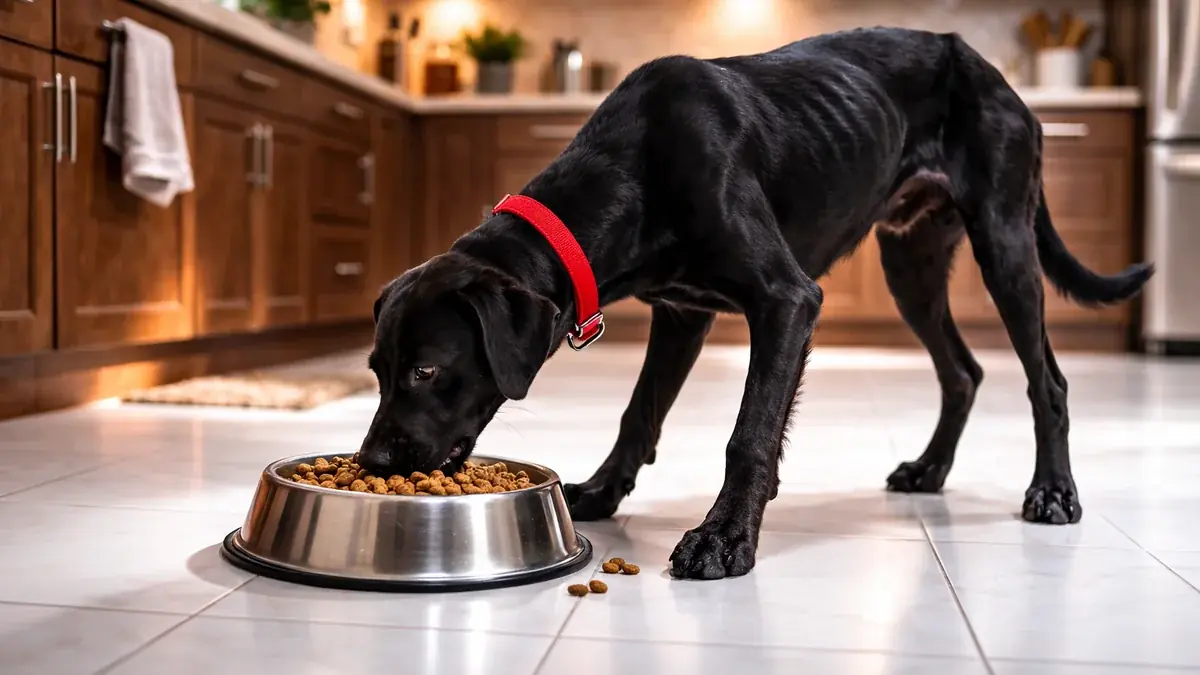
You may have become worried if you’re looking for ways how to help dog gain weight. I know how you feel because I used to have a Labrador who always looked angry when he saw food bowls.
He ate on a regular basis and acted normally, but his ribs remained visible through his fur like hangers. The scenario makes you question everything, even your sanity, every day, even food brands and treats.
It is the truth that no one says clearly online. Not all skinny dogs are starving, and not all fat dogs are healthy. Dogs gaining weight is more like working out than just eating too much.
So instead of giving extra meals at random, we’ll fix the real problem first. By the end, you’ll know for sure how to help dog gain weight safely.
First, understand why your dog stays skinny
A lot of owners blame the amount of food right away without looking closely at other health signs. Many owners search how to help dog gain weight when metabolism is actually the main issue. But dogs often don’t gain weight for reasons that have nothing to do with how many calories they eat.
These are the most common reasons I see repeatedly among American dog owners:
- Huskies and Greyhounds are examples of breeds with fast metabolisms that naturally burn calories quickly.
- Stress and anxiety can make it harder for your body to absorb nutrients in the digestive tract.
- Parasites take calories away from the body before it can use them well.
- Cheap dog food has fillers instead of real food that your dog can digest.
- Even when you’re hungry, hidden dental pain can make chewing uncomfortable.
- Exercise routines that are too long burn more calories than meals that are eaten every day.
The American Kennel Club says that many dogs that look underweight are actually not hungry but have problems absorbing food. You can read more about this here: https://www.akc.org/expert-advice/health/dog-is-underweight/. Knowing how to help dog gain weight the right way will keep them from having digestion problems later in life.
So, before you force-feed your pet extra meals, talk to a vet to make sure there are no medical reasons for it.
What can I give my dog to gain weight?
This question is thoughtful, but it often leads to the worst mistakes. People start giving their pets leftover pizza, butter, or greasy table scraps in the hopes of getting quick results.
I assure you that the method makes diarrhoea happen faster than muscle mass.
Instead, pick foods that are high in calories but still help your body digest and heal. When learning how to help dog gain weight safely, the quality of the food is more important than the quantity.
Safe high-calorie additions
- Cooked eggs give you protein and a good balance of fat.
- Plain Greek yoghurt helps the bacteria in your gut and makes it easier for your body to absorb nutrients.
- Boiled chicken thighs have more calories than lean breast pieces.
- Sweet potatoes add carbs that are easy to digest and don’t upset the stomach.
- Salmon oil helps your coat stay healthy while also serves as answer of how to help dog gain weight.
Instead of replacing your dog’s regular food, mix in small amounts of this food with their regular meals. Your dog needs a balanced diet, not just bigger meals every day.
Best dog food to gain weight and muscle
Always remember that the quality of the food is more important than how often you feed it. Many cheap foods have soy, corn, and byproducts in them that give you energy but don’t give you much nutrition.
The goal of how to help dog gain weight is healthy muscle, not just body fat. I suggest selecting performance or working dog foods made for breeds that are active.
The table below shows what really helps muscles grow in a way that works:
| Food Type | Protein Level | Fat Level | Best For |
| Performance kibble | 28–32% | 18–22% | Healthy weight gain |
| Puppy food formula | 26–30% | 16–20% | Underweight adult dogs |
| Wet food toppers | 20–25% | 8–12% | Appetite stimulation |
| Raw balanced diet | 30%+ | 15–25% | Muscle growth |
Veterinarians often suggest WSAVA-approved brands because the standards for how they are made are always the same: https://wsava.org/global-guidelines/global-nutrition-guidelines/
Over the course of seven days, slowly switch foods to avoid stomach problems during the transition period.
Why is my dog not gaining weight but eating?
It is the most confusing for owners and often makes them panic for no reason. You see your dog happily finishing meals, but their body condition never looks better.
It typically means that calories get into the body, but nutrients don’t stay there very well.
Some possible reasons are:
- Intestinal worms eat nutrients before they can be absorbed properly
- Not having enough pancreatic enzymes makes it hard for the stomach to break down fat.
- Food allergies harm the lining of the intestines, which makes it less effective at absorbing nutrients.
- Doing too much every day burns calories faster than they can be replaced.
A simple stool test at your vet’s office quickly and confidently rules out parasites. Don’t guess here because it will slow down recovery and cost you money over and over again.
Practical feeding routine that actually works
It is the real plan for helping your dog gain weight over time. It’s more important to be consistent than to use extreme feeding methods every now and then.
Follow this daily routine
Morning Meal: A balanced kibble meal with a small protein topper portion
Snack in the afternoon: yoghurt or an egg portion that helps the gut absorb nutrients.
Dinner: regular food plus oil that adds calories
Instead of one big meal every day, give them three smaller ones.
Dogs digest smaller meals better and get more nutrients from them throughout the day. A structured feeding schedule is the base of how to help dog gain weight steadily.
Add healthy fats the smart way
Fat naturally has more than twice as many calories as protein or carbs. So, adding safe fats helps you gain weight faster without making your food volume go up too much.
Some good choices are:
- Capsules of fish oil
- Small amounts of coconut oil
- Chicken fat from making broth
- Sardines packed in water, not oil
Start with small amounts and slowly increase them to avoid problems with loose stools. Even skinny dogs need to exercise. Most people completely ignore this surprising truth.
Muscle weighs more than fat and makes dogs look healthier overall. Short resistance exercises make you hungry and help your body use nutrients much better.
Exercise still matters even for skinny dogs
Most people do not pay attention to this important rule. Muscle weighs more than fat and gives dogs overall healthier body appearance.
Short resistance activities increase appetite and helps improve nutrient utilization dramatically.
Try these easy and light workouts daily:
- Walking slowly up hills gradually strengthens the muscles in your back and legs.
- Tug games make it safe to do controlled resistance training indoors.
- Short fetch sessions naturally make hunger hormones work.
Rest days are still important because that’s when your muscles mostly grow. People often forget that building muscle is a natural part of how to help dog gain weight.
My personal story that changed my approach
Even though I gave my Labrador high-quality food and supplements all the time, he wouldn’t gain weight. After a few months, I realised that he burned calories every day by pacing because he was anxious about being alone.
We added toys that made things more fun and made things a lot less stressful. His body condition got better in three weeks without having to eat a lot more food.
Sometimes, behavioural factors hurt nutrition more than just eating the wrong foods.
Mistakes that Dog owners often make without realising it
Stay away from these because they slow down progress and make your stomach hurt more at the same time.
- Free feeding all day naturally lowers how hungry you feel.
- Changing food every week makes it harder for the body to adapt and absorb nutrients.
- Taking too many supplements can cause diarrhoea and problems with nutrient balance.
- Ignoring dental pain makes it very hard to chew.
When the body feels safe and stable, it slowly but surely gains weight.
External professional resources
The Cornell Veterinary Nutrition Library has reliable information about how to feed your pet: https://www.vet.cornell.edu/departments-centers-and-institutes/cornell-feline-health-center
For dog owners, PetMD makes it easy to understand how to count calories: https://www.petmd.com/dog/nutrition/calories-dog-food
Both sources help you figure out how much you should eat each day instead of just guessing.
Quick reference feeding boosters
| Booster | Purpose | Frequency |
| Salmon oil | Calorie rich fat | Daily small dose |
| Egg | Protein support | Three times weekly |
| Yogurt | Gut bacteria | Alternate days |
| Chicken thigh | Energy boost | Weekly meal addition |
Tracking weekly progress helps measure how to help dog gain weight correctly.
Conclusion
To help a skinny dog, you need to be patient, watch them, and make small, steady improvements every day. Sadly, random overfeeding doesn’t work very often and can even hurt digestion for good.
You now know how to help dog gain weight in a safe and responsible way. Always pay attention to how well you absorb nutrients, eat a balanced diet, stay emotionally stable, and get some exercise.
Your dog doesn’t need to be forced to eat; you should feed them in a way that makes sense. Read other helpful articles on this website https://healthinnovate.org/ for pets’ care tips.
Share this guide with another worried dog owner today if it helped you. You now know exactly how to help dog gain weight.