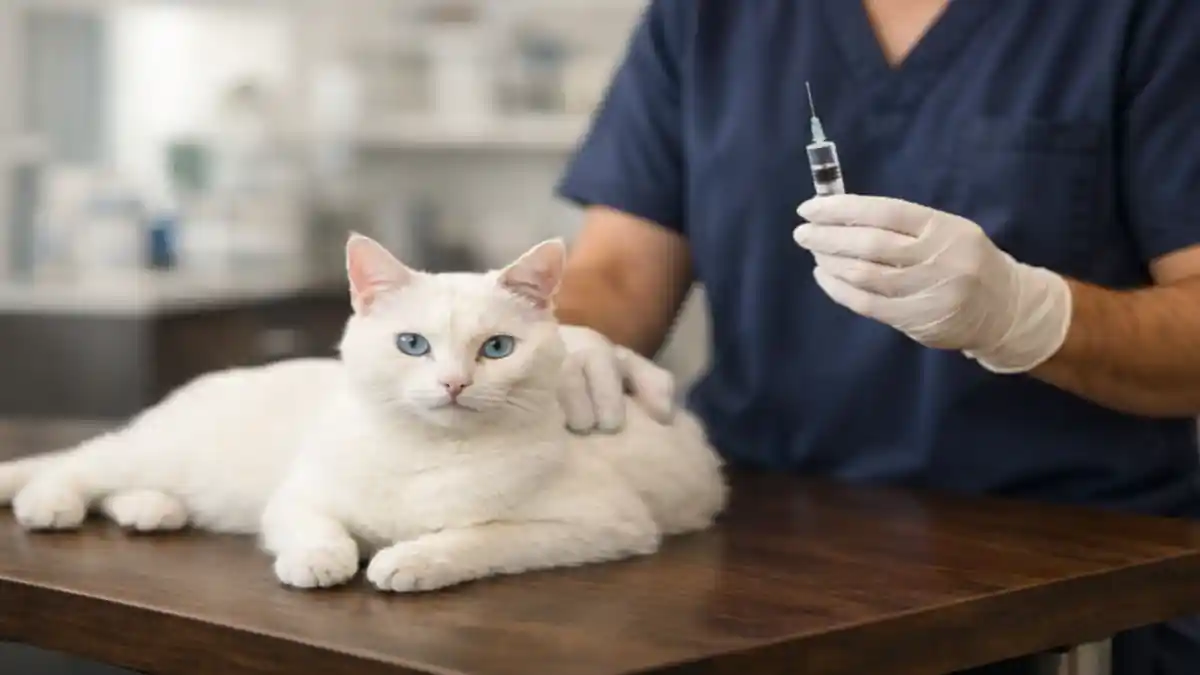
When you book your plane tickets and feel good about yourself, the first thing that comes to mind is what vaccines do cat needs to be boarded.
You are getting ready for your trip and feeling responsible and focused, but then the boarding office asks for proof of vaccination. Suddenly, you go from calm to a little panicked.
I’ve seen this happen to cat owners all over the United States many times. Once you really get what the requirements are, they aren’t too hard to follow.
This detailed guide will tell you everything you need to know about what vaccines do cats need to be boarded in the US, why they are important, when to schedule them, and how to stay out of stress at the last minute.
Why Boarding Facilities Require Vaccines in the First Place
Think of a boarding facility as a small hotel for cats. There are separate suites, but the air systems and sometimes the play spaces are shared.
Viruses can spread through droplets, surfaces, and people who deal with them, even if cats aren’t touching each other. One sick cat can unknowingly spread the disease to other cats in a few hours.
That’s why the rules about vaccinations are strict and can’t be changed. The American Veterinary Medical Association says that core feline vaccines guard against highly contagious and serious illnesses that spread easily in groups.
Boarding facilities do not want to make things hard for you. They are keeping all of the animals safe they care for, including your pet.
What Vaccines Do Cats Need to be Boarded in kennels in the USA?
If you are asking what vaccines do cats need to be boarded in American kennels, the answer usually includes two necessary vaccines and one that many people ask for.
Most boarding facilities in the US need:
- Current vaccination against rabies
- Getting the FVRCP vaccine right now
- Vaccination against Feline Leukemia (FeLV) sometimes
Policies differ slightly by state and facility, but these three vaccines cover almost all situations.
Rabies Vaccine: The Legal and Essential Requirement
Most states in the US require rabies vaccinations by law. This disease is deadly and can spread to people, so it is a major public health problem.
The official website of the Centers for Disease Control and Prevention (CDC) (Centers for Disease Control and Prevention | CDC) makes it very clear what the standards are for preventing rabies and getting vaccinated.
When boarding facilities ask what shots a cat needs, rabies is always at the top of their list of requirements.
Most places need:
- Proof that you are currently vaccinated against rabies
- A certificate from a licensed veterinarian
- The vaccine must be given at least seven days before boarding.
Some vaccines work for a year, while others work for three years. Always check the date on your cat’s certificate to see when it expires.
FVRCP Vaccine: The Core Combination Protection
People often call FVRCP the “feline distemper shot,” but it actually guards against three kinds of viruses:
- Rhinotracheitis in cats
- Calicivirus
- Panleukopenia
These viruses can cause upper respiratory infections, tiredness, fever and in serious cases, complications that could kill you.
The biggest worry in a boarding environment is respiratory infections. That’s why you usually must get the FVRCP vaccine.
Most places need the FVRCP vaccine to be up to date within one to three years, depending on how your vet gave it to you.
FVRCP is a very important component of the reply to the question, “What vaccinations does a cat need to go into a cattery?”
Feline Leukemia (FeLV): Sometimes Required but Highly Recommended
FeLV isn’t always required for boarding, but a lot of places do ask for it, especially if cats will be in the same room.
The American Association of Feline Practitioners says that cats that are at risk should get the FeLV vaccine, especially if they spend time outside or with other cats.
Some boarding facilities won’t accept first-time boarders unless they show proof of a negative FeLV test. Some people need to get their cat vaccinated if it is under a certain age.
Even if your boarding centre doesn’t require FeLV, it’s a good idea to talk to your vet about it for future protection.
Quick Overview of Boarding Vaccine Requirements
Here’s a simple list to help you learn about what vaccines do cats need to be boarded in the US.
| Vaccine | Required by Most Boarding Facilities | Legally Required | Typical Validity |
| Rabies | Yes | Yes, in most states | 1–3 years |
| FVRCP | Yes | No | 1–3 years |
| FeLV | Sometimes | No | 1–2 years |
Always check with the boarding facility you choose to make sure you meet all their requirements.
Timing Rules You Should Never Ignore
The timing of the vaccine is just as important as the vaccine itself. Immunity doesn’t happen right away after an injection.
Most places require that vaccines be given at least one to two weeks before boarding. Your cat’s immune system needs this time to build up protection.
The facility may not let your cat in if you vaccinate it the day before you drop it off. I’ve seen owners rush to change their vacation plans because of this mistake.
Make plans before time. At least a month before you leave, call the place where you’ll be staying. Make sure you understand what they need. Then make an appointment with your vet based on that.
What vaccines Do Cats Need to be Boarded? A Simple Checklist
You should have the following things ready before boarding:
- A rabies certificate that is still valid
- A valid FVRCP certificate
- FeLV paperwork if needed
- Information about how to reach your veterinarian
- Information for emergency contacts
You should keep digital copies in your cell phone and a hard copy in your travel bag. Getting ready keeps things from getting out of hand.
What Is the 3 3 3 Rule for Cats Moving?
The 3-3-3 rule explains how cats deal with new places emotionally. People usually talk about it in the context of adoption, but it also applies to boarding situations.
The rule says:
- The first three days are too much and hard to understand.
- The first three weeks are all about getting used to things.
- The first three months help you feel comfortable and trust the person for a long time.
Boarding periods are shorter than permanent shifts, but the first three days are still important.
You can lower your stress by bringing things you know, like:
- A throw blanket that smells like home
- The food your cat eats every day
- A toy they love
Knowing this type of emotional change will help you get ready in a realistic and caring way.
Additional Health Requirements Beyond Vaccines
Vaccines are important, but they aren’t the only thing you need to talk about when it comes to what vaccines do cats need to be boarded.
Most places also need:
- No signs of being sick can be seen
- Certification that there are no fleas
- Ears and eyes that are clean
- Parasite prevention that is up to date
Some high-end places want you to have had a wellness exam in the last year. Some people may ask for their nails to be cut before they get on board.
To avoid surprises, always inquire directly about extra rules.
Why Indoor Cats Still Need Boarding Vaccines
Many cat owners think that indoor cats don’t need certain vaccines. However, boarding facilities can’t check claims about lifestyle. Even cats that only live inside can get viruses that are in the air in shared ventilated spaces.
Not only does vaccination protect your cat, but it also protects all the other animals in that space. That’s why requirements apply to everyone.
That’s exactly why what vaccines do cats need to be boarded applies to indoor cats as well.
A Realistic Scenario Every Owner Should Consider
A few years ago, my friend came to drop off her pet without the most recent FVRCP paperwork. The cat was pretty, healthy, and calm. Sadly, paperwork is more important than looks.
The facility turned her away because the vaccine had expired three weeks before. The owner had to cancel their trip and pay cancellation fees. With some simple planning, this situation can be avoided.
This is why cat owners should check what vaccines do cats need to be boarded before they go on vacation.
How to Prepare Weeks Before Boarding
Here’s a timeline that flows well:
Four weeks before you leave:
Call the boarding facility to make sure you know what vaccinations are needed.
Three weeks before you go:
Make an appointment with the vet if you need to make changes.
Two weeks before you leave:
Make sure that vaccines are given on time.
One week before you leave:
Get your paperwork in order and pack things that make you feel at home.
This method takes away anxiety and gives you mental relaxation.
Internal and External Resources for Cat Health
You can read more pet health articles on healthinoovate.org (https://healthinnovate.org/) that talk about pets if you want to learn more about general pet health and preventive care.
The American Veterinary Medical Association (American Veterinary Medical Association) and the Centers for Disease Control and Prevention (Centers for Disease Control and Prevention | CDC) both have good public resources that can help you figure out how to get your pets vaccinated.
Final Thoughts: Boarding With Confidence and Calm
Knowing what vaccines do cats need to be boarded clears up any confusion right away.
In most American boarding establishments, you need:
- A rabies shot that is up to date
- Getting the FVRCP vaccine right now
- Maybe a vaccination against FeLV
That is the basis for safe boarding preparation.
Schedule it on time and be clear when you talk. Organize your papers. You should be able to enjoy your trip without having to deal with paperwork problems. While you’re gone, your cat needs a safe and protected place to stay.
If this guide made you feel more ready and sure of yourself, give it to another cat owner who might be going on a trip soon. Being a responsible pet owner isn’t flashy, but it’s powerful and always pays off.
Remember this: what vaccines do cats need to be boarded depends on the place, but rabies and FVRCP are usually mandatory.