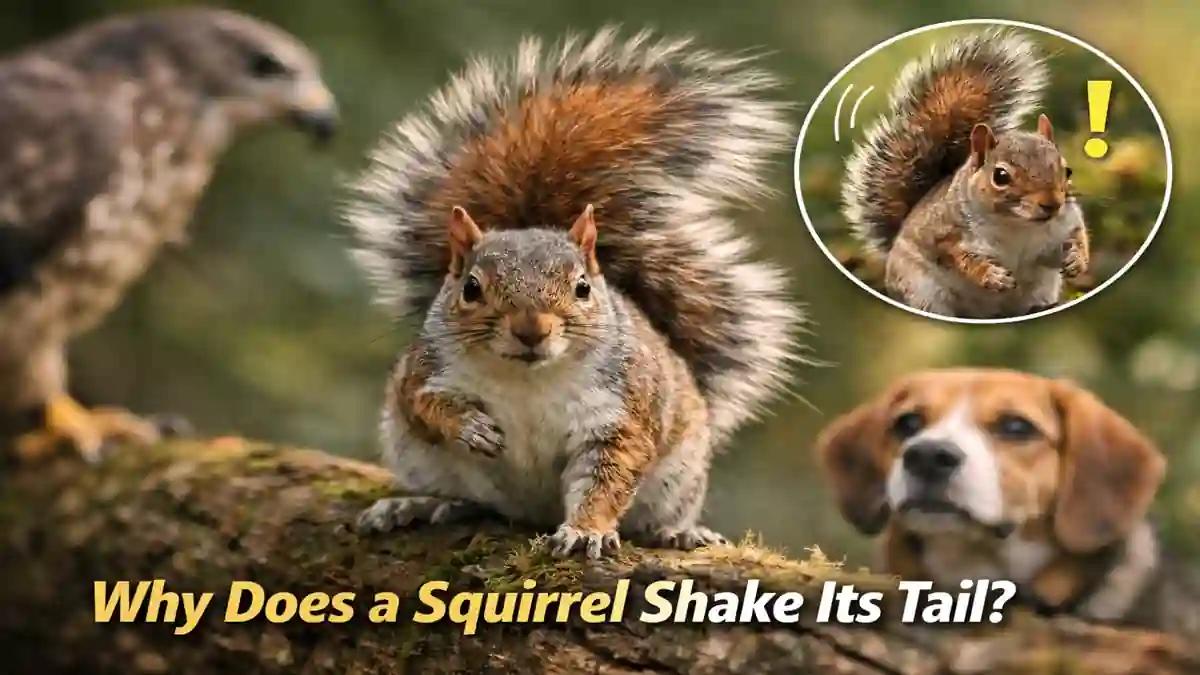
Many people who observe wildlife in their backyards quickly pick up on one odd behavior. A squirrel stops abruptly and starts repeatedly flicking its fluffy tail. The movement may appear haphazard or mildly humorous at first. However, wildlife specialists clarify that this behaviour has significant significance.
People who like to watch animals often wonder why does a squirrel shake its tail when it’s quiet in the backyard. Squirrels use this tiny movement as an important communication gesture. The tail serves as a visual alert system to alert people in the vicinity. Knowing this easy signal makes it easier to understand why does a squirrels shake its tail when danger is near.
Signals of Communication That Describe Why does a Squirrel Shake Its Tail
Squirrels rarely make loud sounds, so they depend mainly on body language. They use their posture and tail movements to convey danger rather than yelling warnings. In forest settings, their fluffy tail waves across the branches like a flag.
Tail flicking has multiple meanings, according to wildlife researchers who study squirrel behaviour. These definitions make it easier to understand why squirrels shake their tails in various contexts.
Typical signals consist of:
- Alerting other squirrels to potential threats
- Getting upset when animals invade the area
- Displaying interest in strange sounds or movements
- Keeping rival squirrels away from food sources
Every signal provides crucial hints as to why does a squirrel shake its tail while doing its usual activities.
The Biological Reason Behind why does a squirrel shake its tail
Researchers looking into small mammals have found some amazing information about squirrel communication. Their tails developed into multifunctional elements that aid in survival, communication, and balance.
Squirrels in the area quickly receive warning signals from the shaking movement. Even if they are far away from one another, other squirrels will immediately notice the movement.
Squirrels rely largely on visual cues, according to National Wildlife Federation wildlife experts. Additional wildlife insights are available at https://www.nwf.org. A communication system contributes to the scientific explanation of why does a squirrel shake its tail in response to potential predators.
What It Means When a Squirrel Looks at You and Flicks Its Tail
Squirrels can be seen staring straight at homeowners from tree branches. The squirrel frequently shake its tail quickly or slowly during that time.
This response typically indicates that the squirrel is nervous or unsure of the human presence. The animal seeks to ascertain whether the individual poses a threat or is merely curious.
People often wonder why does a squirrel shake its tail while keeping eye contact. Curiosity and defensive awareness are typically combined to provide an answer.
What Does It Mean When a Squirrel Flares Its Tail Dramatically
Squirrels occasionally shake their tails vigorously and spread them wide. Compared to normal tail flicking movements, this behaviour seems far more dramatic.
Strong defensive behaviour toward potential threats is typically indicated by tail flaring. This intense display is frequently caused by predators such as hawks, dogs, or cats.
This defensive signal, according to researchers, explains another reason why squirrels suddenly shake their tails.
Is It Normal Behaviour for Squirrels to Shake Their Tails
A common question among wildlife observers is whether tail shaking is a sign of disease or trauma. The majority of squirrel species still exhibit tail shaking as a normal behavior.
Red squirrels, fox squirrels, and eastern gray squirrels all exhibit comparable tail signals. Their actions merely demonstrate their ongoing awareness of their surroundings.
People can often better understand why squirrels shake their tails as part of their daily survival routines by observing these movements.
What Does It Mean When a Squirrel Shake Its Tail at a Dog
Squirrels frequently react violently to approaching pets, as some dog owners report. The squirrel swiftly moves higher and starts wildly shaking its tail.
This behavior conveys warning signals and territorial defense to the dog. In short, the squirrel tells the dog to keep away right away.
When discussing why does a squirrel shake its tail close to dogs, wildlife experts frequently mention this situation.
Common Tail Movements and Their Meaning
A useful table outlining various tail signals can be found below.
| Tail Movement | Meaning | Situation |
| Quick Tail Flicking | Alert signal | Predator nearby |
| Wide Tail Flaring | Defensive warning | Strong threat present |
| Slow Tail Wave | Curious observation | Watching humans |
| Repeated Tail Shaking | Communication | Warning nearby squirrels |
This table explains behavioral patterns that explain why squirrels shake their tails in various situations.
How Tail Signals Help Squirrels Survive in the Wild
Beyond just being a means of communication, squirrel tails have many other uses. They enable animals to jump across branches while maintaining their balance quickly.
During the colder winter months, the tail also aids in controlling body temperature. Above all, the tail serves as a silent visual warning system.
These advantages for survival provide a biological explanation for why squirrels shake their tails in perilous circumstances.
Urban Environments and Increased Tail Signaling Behavior
Squirrels and other wildlife animals live in complex environments created by cities. While food is abundant in urban areas, there are also many unexpected risks.
Small animals are more stressed by cars, pets, and people’s constant movement. In response, squirrels use their tails to communicate more expressively.
Why does a squirrel shake its tail more frequently in urban neighborhoods is a common question for researchers who study city wildlife.
How Food Competition Influences Tail Shaking Behavior
When squirrels share territory, aggressive communication is frequently triggered by food competition. Small territorial disputes are frequently caused by bird feeders and nut sources.
When defending its food, a squirrel may violently flick its tail at competitors. Other squirrels are immediately warned to keep their distance by the signal.
Understanding feeding habits also makes it easier to understand why does a squirrel shake its tail when it is competing.
Visit our website https://healthinnovate.org/ about squirrel food to learn more about squirrel diet and other pet related articles.
Funny Moments When Tail Shaking Looks Entertaining
Backyard wildlife observers may find it amusing when squirrels shake their tails. While hiding behind a tree trunk, the squirrel may flick its tail.
These humorous incidents frequently occur when squirrels are unsure about people in the area. The animal is still inquisitive but wary of getting too close.
Observers are reminded by these amusing scenarios of why squirrels shake their tails in curious situations.
Why Tail Communication Is More Effective Than Loud Noises
Predators in the area can determine an animal’s location directly from sound signals. Visual signals effectively convey warnings while remaining silent.
Squirrels can warn others without creating noise by flicking their tails. This evolutionary advantage makes it very evident why does a squirrel shake its tail instead of yelling.
Professional Advice for Safely Observing Squirrels
If you like to observe wildlife in your backyard, observe basic decency.
- Keep your distance from squirrel nests and young.
- Don’t give unhealthy snack foods to people.
- Be cautious when approaching squirrels.
- Respect animals’ natural behavior without upsetting them.
These behaviors enable safe observation while discovering the reasons behind a squirrel’s natural tail shaking.
Conclusion: The Real Reason Behind why does a squirrel shake its tail
Close observation of squirrels reveals amazing ways that wildlife communities communicate. The movements that appear random are often actually meaningful survival signals.
Shaking one’s tail alerts others, shows interest, and defends one’s territory from danger. Knowing why does a squirrel shake its tail turns casual backyard observations into opportunities to educate people about wildlife. Share this article to someone who is also wondering why does a squirrel shake its tail?
The squirrel is communicating silently, so keep that in mind the next time you see its fluffy tail flicking energetically. Nature frequently communicates subtly through tiny cues that disclose remarkable behavior.